800.942.4447


 Addresses
 Wallet
 Orders
 Invoices
 Item History
 Favorites
 Change Password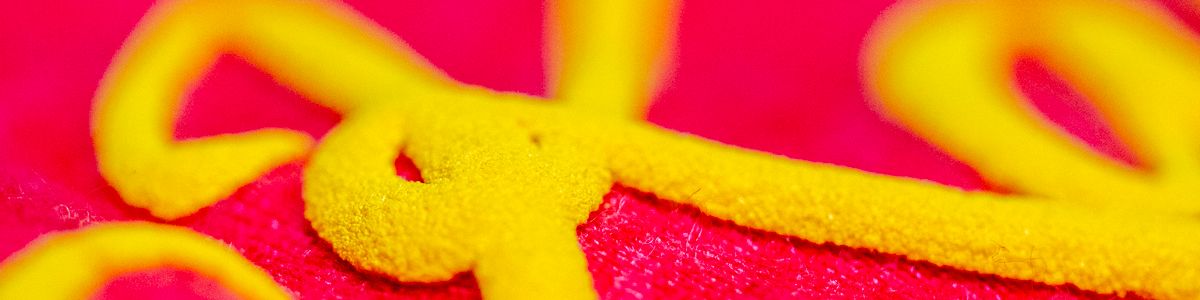
Puff ink and regular screen printing ink may begin with a similar plastisol base, but they create very different finished prints. Regular ink is formulated to produce a smooth, controlled layer of color. Puff ink contains an expanding agent that reacts during curing and raises the print above the garment.
Neither option is better for every project. Regular plastisol is more versatile and holds finer detail, while puff ink creates a dimensional effect that can turn simple artwork into a premium specialty print.
What Is Regular Screen Printing Ink?
Regular plastisol ink is designed to remain close to the surface of the garment after curing. Depending on the formula, it may provide strong opacity, a soft feel, bleed resistance, stretch, or low-temperature curing.
Our 480 Series is an example of an easy-printing general-purpose plastisol for cotton and poly/cotton garments. It works well on light fabrics or over a white underbase and is suitable for wet-on-wet production.
Regular ink is normally the better choice for:
- Fine lettering and detailed artwork
- Halftones and gradients
- Large multicolor production runs
- Standard logos and team designs
- Prints that should remain relatively smooth
- Jobs requiring predictable color and registration
What Is Puff Ink?
Puff ink is a specialty ink that expands when heated. As the print passes through the dryer, the expanding agent increases the height of the ink deposit and creates a raised, three-dimensional surface.
Our 680 Puff Series is designed for dimensional printing on T-shirts, sweatshirts, socks, gloves, and similar products. It has a creamy viscosity, is available in many colors, and can also be used to create gripping surfaces on the bottoms of socks or fingers of gloves.
The amount of rise depends heavily on the amount of ink deposited. A heavier print produces a more dramatic puff, while a thinner deposit creates a subtle raised effect.
Appearance And Texture
Regular plastisol usually produces a flat or slightly raised surface. The final feel depends on the mesh, stencil thickness, ink formula, and number of print strokes.
Puff ink rises noticeably above the fabric and normally develops a softer, rounded texture. It can create:
- Raised lettering
- Dimensional outlines
- Foam-like graphic areas
- Textured fashion prints
- Grip dots and functional surfaces
Puff is most effective when it is used intentionally. Printing an entire complex design in puff can create a heavy result, while using it as an accent can add dimension without overwhelming the garment.
Artwork Requirements
Regular ink provides much greater freedom for detailed artwork. Thin lines, small type, tight negative spaces, and halftones can be reproduced when the ink, mesh, and stencil are properly matched.
Puff ink expands outward as well as upward. Very small openings can close, thin lines can become wider, and tightly spaced elements may merge during curing.
Puff artwork normally works best with:
- Bold lettering
- Open shapes
- Moderate spacing between elements
- Simple outlines
- Areas designed specifically for expansion
Avoid extremely small text and detailed halftones unless testing proves that the selected ink deposit produces an acceptable result.
Mesh And Ink Deposit
Regular ink can be printed through many mesh counts. A general-purpose color may work through higher mesh for detail, while an opaque white may require a more open mesh for coverage.
Puff ink needs enough deposit to expand. If it is printed through mesh that deposits too little ink, the final print may show only a slight rise.
A practical puff setup normally uses:
- A lower mesh count than a fine-detail regular print
- A stencil thick enough to provide the intended deposit
- One controlled print stroke or a tested print-flash-print sequence
- Enough ink in the screen to flood the image completely
More ink generally creates more puff, but an excessive deposit can expand unevenly or lose edge definition. Test several deposits before production rather than assuming the thickest print will look best.
Squeegee Selection And Pressure
Regular plastisol is commonly printed with a medium 70-durometer squeegee. Harder blades can reduce the deposit and improve detail, while softer blades lay down more ink.
Puff ink usually benefits from a softer blade and controlled pressure because the goal is to leave enough ink on the garment for expansion. Our Squeegee Rubber is available in several durometers, including 60 durometer for thicker deposits and 70 durometer for general-purpose printing.
Excessive pressure can drive puff ink into the fabric instead of leaving it on the surface. Use enough pressure to clear the stencil without crushing the deposit into the garment.
Curing Differences
Regular plastisol cures when the entire ink film reaches the temperature required by the formula. The print should fuse into a flexible, durable layer without changing dramatically in height.
Puff ink must both expand and cure. If it receives too little heat, it may not rise fully or may remain under-cured. Too much heat or excessive dwell time can cause the surface to become irregular, collapse, or lose the intended texture.
Follow the technical instructions for the specific puff ink. Do not judge the process only by how much the ink rises. A print can appear fully expanded while still requiring confirmation through cure and wash testing.
Allow test prints to cool before evaluating the final height and texture. Puff may look different immediately after leaving the dryer than it does at room temperature.
Can Puff Ink Be Printed Over An Underbase?
Puff can be printed directly on many garments, but dark fabrics may require additional coverage depending on the color and formula.
A white underbase can brighten the puff color, but it also changes the total ink deposit and may affect expansion. A heavy underbase can make the print feel bulky or create an uneven surface beneath the puff layer.
When an underbase is needed:
- Keep it controlled rather than excessively thick
- Choke it so it does not extend beyond the puff color
- Flash only enough to prepare it for the next screen
- Test the complete underbase-and-puff combination
Do not assume the same underbase used for regular ink will automatically provide the best puff result.
Opacity And Color
Regular plastisol is available in formulas ranging from transparent process colors to highly opaque inks. This allows printers to select the precise level of coverage required by the garment.
Puff ink can provide strong color, but expansion changes how light reflects from the surface. The cured shade may appear lighter or softer than the wet ink or an equivalent regular plastisol color.
Always approve the fully cured puff print rather than matching color from the container. The garment, underbase, deposit, and amount of expansion can all influence the final appearance.
Detail And Registration
Regular ink is more suitable for jobs where precise registration is critical. It does not intentionally spread during curing, so properly separated colors should remain close to their printed dimensions.
Puff expansion makes exact edge control more difficult. If puff is printed beside another color, allow enough separation or overlap to account for the rise.
When combining puff with regular ink:
- Use puff only in selected areas
- Keep nearby fine details away from expanding edges
- Consider printing puff later in the sequence
- Test whether previous flash heat starts the expansion too early
The best print order depends on the artwork and press setup.
Durability And Washing
Properly cured regular plastisol should remain flexible and durable through repeated washing. Puff ink can also be durable, but its raised surface receives more friction during wear and laundering.
For both ink types:
- Cure the complete deposit
- Allow the print to cool before stretching
- Perform wash and dry testing
- Test the actual garment rather than only a sample square
Very tall puff deposits and sharp raised edges may experience more abrasion than a smooth regular print. Artwork with controlled shapes and rounded transitions generally wears better.
Can You Turn Regular Ink Into Puff Ink?
Some systems offer puff additives that can be mixed into compatible plastisol, but the amount added must be carefully controlled. Too little may create almost no effect, while too much can weaken color, alter curing, or produce inconsistent expansion.
A premixed product such as the 680 Puff Series removes much of that uncertainty because the expansion, viscosity, and color have already been formulated together.
Do not mix household foaming products or unrelated additives into screen printing ink. Use only materials designed and approved for the specific ink system.
Should Puff Ink Be Thinned?
Puff ink depends on a controlled deposit, so excessive reduction can weaken the effect. A thinner ink may print more easily but leave too little material to create the desired height.
Before considering an adjustment:
- Bring the ink to room temperature.
- Mix it thoroughly.
- Confirm that the mesh is appropriate.
- Check the stencil, screen tension, and squeegee.
- Run a controlled print and cure test.
Only use an approved reducer when the manufacturer permits it, and test a small quantity before modifying the full container.
Cost And Production Speed
Puff ink is normally sold as a premium specialty product and may require more ink per print because the effect depends on deposit thickness. Additional setup and testing should also be included when quoting the job.
Regular plastisol is generally more economical for everyday production because it can print through higher mesh counts with thinner deposits and less artwork restriction.
Puff may still provide better value when the dimensional effect allows the shop to charge a premium. Price it as a specialty decoration rather than treating it as an ordinary additional color.
When To Use Regular Ink
Choose regular screen printing ink when:
- The artwork contains fine detail or halftones
- A smooth surface is preferred
- Precise registration is important
- The design includes several closely registered colors
- You need maximum production versatility
- The customer did not request a raised effect
When To Use Puff Ink
Choose puff ink when:
- The customer wants a raised three-dimensional print
- The artwork contains bold, open shapes
- You want to emphasize lettering or selected graphic areas
- A textured fashion effect adds value to the garment
- You need gripping areas on socks or gloves
- The job can support additional testing and a heavier deposit
Final Thoughts
Regular screen printing ink is the more versatile choice for everyday printing, fine detail, smooth surfaces, and precise multicolor work. Puff ink is a specialty tool designed to expand during curing and create visible height and texture.
The primary differences are artwork requirements, ink deposit, mesh selection, squeegee choice, curing behavior, and finished texture. Puff ink needs bold artwork and enough deposit to rise, while regular plastisol offers greater control and detail.
Use the 480 Series when you need an easy-printing general-purpose plastisol. Choose the 680 Puff Series when the design benefits from a durable raised effect.
Whichever ink you choose, print and cure a sample on the actual garment before production. The best result comes from selecting the ink during the design stage instead of trying to add a special effect after the screens have already been prepared.