800.942.4447


 Addresses
 Wallet
 Orders
 Invoices
 Item History
 Favorites
 Change Password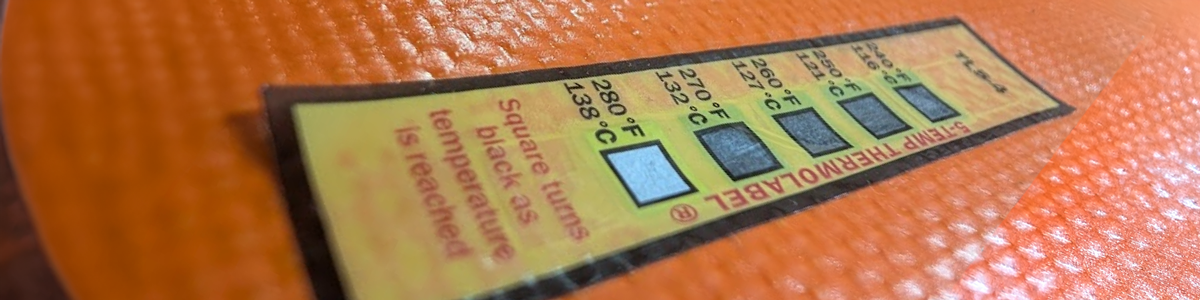
Getting flash temperatures right is one of the most important parts of producing high-quality prints. Flash too little and colors smear together. Flash too much and you may cause adhesion problems, dye migration, or difficulty printing additional colors.
At One Stroke Inks, we help printers solve curing and flashing problems every day. Understanding what flash curing does and how to control it can improve print quality and reduce costly mistakes.
What Is Flash Curing?
Flash curing is the process of partially curing ink between colors. The goal is not to fully cure the print. Instead, the purpose is to gel the surface enough so the next color can be printed without mixing into the previous layer.
Flash curing is commonly used for:
- Multi-color designs
- Underbase whites
- Highlight colors
- Layered prints
- High-opacity printing
A proper flash allows production to continue smoothly while maintaining sharp details.
Flashing Is Different From Final Curing
Many new printers confuse flash curing with final curing.
A flash dryer only gels the surface of the ink. The final cure takes place later, usually in a conveyor dryer or heat press.
Standard plastisol inks often reach full cure around 320°F, while many low-cure systems are designed to cure at lower temperatures.
During flashing, the objective is simply to make the surface dry to the touch without completely curing the ink layer.
How Hot Should A Flash Dryer Be?
There is no single temperature setting that works for every setup.
Factors that affect flashing include:
- Distance between the flash and garment
- Ink thickness
- Garment color
- Ink formulation
- Dwell time
- Room temperature
Most printers adjust their flash so the ink becomes dry enough to accept the next color without overcooking the print.
The exact settings depend on your equipment and should always be verified through testing.
How To Tell When The Ink Has Flashed Properly
The surface of the ink should be dry and smooth to the touch.
Lightly tap the print with your finger. The surface should no longer feel wet or tacky, but it should still have some flexibility underneath.
If the next color prints cleanly without picking up the previous layer, the flash is doing its job.
Problems Caused By Under-Flashing
If the ink does not flash enough, you may see:
- Colors smearing together
- Ink buildup on the bottom of screens
- Loss of fine detail
- Poor registration
- Muddy prints
These problems are especially common with white underbases and multi-color jobs.
Problems Caused By Over-Flashing
Too much heat can create a different set of issues.
- Poor adhesion between colors
- Rough print surfaces
- Difficulty laying down additional colors
- Dye migration on polyester garments
- Reduced flexibility
Completely curing the underbase before printing the next color can cause layers to separate and reduce wash durability.
Polyester Garments Require Extra Care
Athletic wear and polyester garments are more sensitive to heat than cotton.
Excessive flash temperatures can activate dyes inside the fabric and lead to dye migration. White prints may eventually turn pink, gray, or yellow.
Products such as Poly Trans 25 Series, Underbase LC White, and Soft FX LC Series are designed to help reduce these problems by allowing lower cure temperatures.
White Inks Need Proper Flashing
White underbases are often the first layer in multi-color designs. Proper flashing helps prevent pickup and maintains crisp registration.
Products such as 2001 Dream White, #26 HV White, and MIA White are formulated to provide excellent opacity and smooth printing when flashed correctly.
Use Temperature Tools Instead Of Guessing
Every flash dryer behaves differently. Factors such as voltage, bulb age, and distance from the platen affect heat output.
Infrared temperature guns and temperature strips help eliminate guesswork and improve consistency.
Products like Thermolabels provide a simple way to monitor temperatures during production.
Practice Makes Flashing Easier
Every shop develops its own process based on equipment, garments, and ink systems. Small adjustments in flash height and dwell time often produce major improvements in print quality.
At One Stroke Inks, we recommend testing new garments and ink combinations before large production runs. Understanding the difference between flashing and final curing helps prevent costly mistakes and produces prints that look great and stand up to repeated washing.